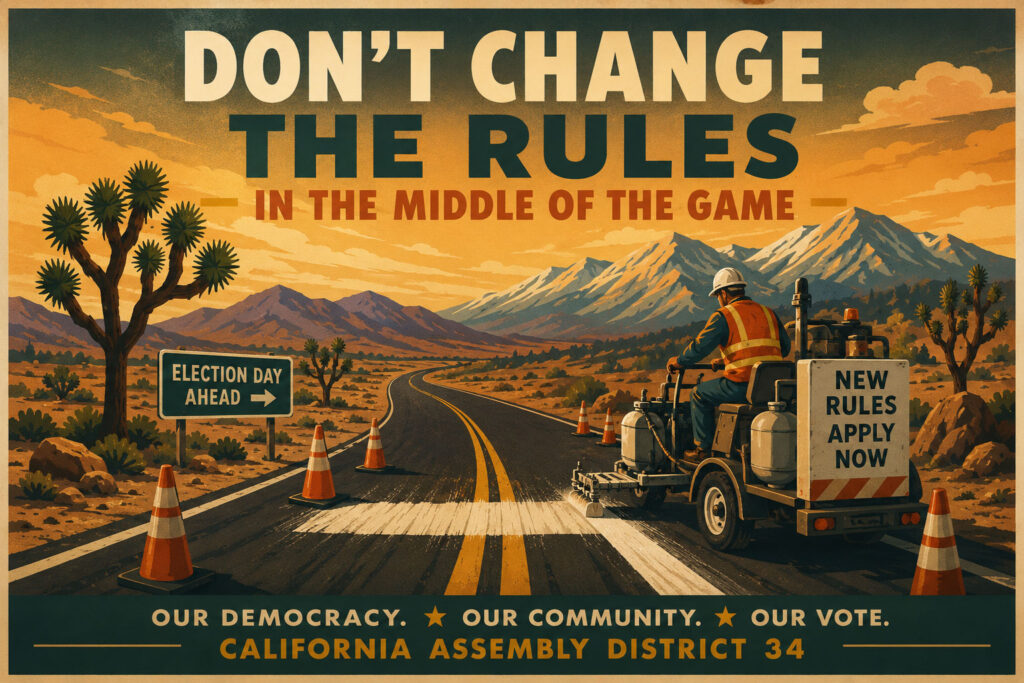
There is a basic rule most of us learned on the playground: You don’t change the rules in the middle of the game. It is an especially important rule when the game is democracy.
With a national election just weeks away, Americans are once again facing uncertainty about how our votes will be cast, mailed and counted. New federal requirements affecting voting and mail ballots are being pushed forward while courts continue to decide whether some of those changes are even lawful.
Whatever your politics, that should concern you.
I want to start with something on which I suspect nearly all of us agree: Only eligible American citizens should vote in our elections. That’s already the law. Where reasonable people can disagree is over how we enforce it, and whether changes intended to make elections more secure could instead make it harder for eligible citizens to exercise their right to vote.
After 18 years in local government, I’ve learned that implementation matters. A lot. A policy that sounds perfectly reasonable in a sentence can cause enormous problems if it is poorly designed, rushed into effect or imposed without enough time for the people responsible for carrying it out to prepare.
Elections are no different. Our election system depends upon thousands of state and local officials, postal workers, poll workers and volunteers following carefully established procedures. Changing those procedures shortly before an election creates opportunities for mistakes, confusion and distrust. And that distrust may be the most dangerous part.
We’ve seen an increasingly troubling pattern in American politics and public life. When an institution produces an outcome someone doesn’t like, attack the institution. If you can’t win under the rules, try to change the rules. If you cannot convince people the system is actually broken, convince them they cannot trust it. There’s a name for a strategy built around confusion and mistrust: fear, uncertainty and doubt. FUD.
The result is that Americans increasingly question institutions we once took for granted: elections, courts, Congress, the press, public agencies and even the peaceful transfer of power itself. None of these institutions is perfect. They deserve scrutiny, criticism and reform when reform is needed. Improving an institution, however, is very different from undermining people’s faith that it can work at all.
Ronald Reagan understood the importance of that distinction. Speaking about voting rights in 1981, President Reagan called voting “the most sacred right of free men and women.” Later that year, as he called for extending the Voting Rights Act, he went even further. He called the right to vote “the crown jewel of American liberties” and said that every American must be able to count on “an equal chance and an equal vote.”
Those aren’t Democratic principles or Republican principles. They’re American principles.
I’ve seen firsthand just how much a vote can matter. Local elections can turn on dozens of votes. Elections can end in ties. Your vote isn’t symbolic. It is a small piece of actual political power that belongs to you.
That’s particularly important to remember at a time when Americans understandably feel powerless. We hear constantly about billionaires, powerful corporations, political insiders and national organizations spending enormous sums trying to influence our government. It can leave an ordinary person wondering what possible difference they can make.
Here’s one answer: On Election Day, a billionaire gets one vote. So do you.
That is one of the great equalizers of American democracy, and it is one reason our response to uncertainty about elections cannot be cynicism. It has to be participation.
Don’t let anyone convince you that voting is pointless. Don’t let confusion about changing rules become a reason not to participate. And this year especially, don’t wait until the last possible moment.
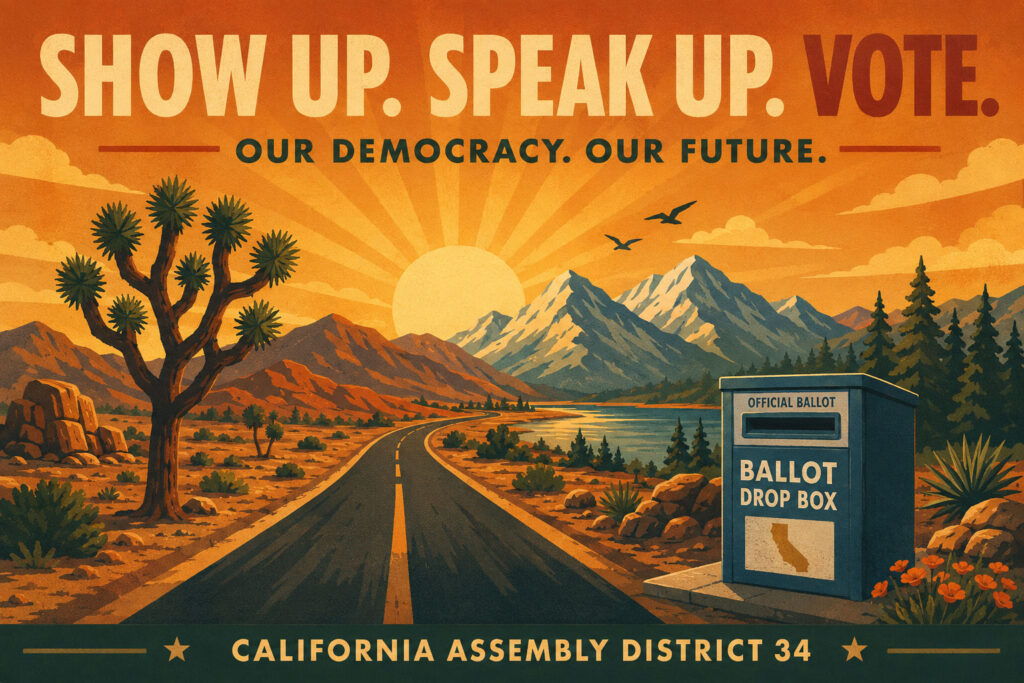
If you’re voting by mail in California, return your ballot early. I recommend mailing it at least two weeks before Election Day whenever possible. You can also return it to an official ballot drop box or vote early in person. However you choose to vote, make a plan and make sure the people you care about have a plan too.
There’s an old saying that cheaters never prosper. In a democracy, we have some responsibility for making that true.
We do it by paying attention, demanding fair rules and insisting those rules apply equally to everyone. We do it by refusing to surrender to fear, confusion and cynicism. Most importantly, we do it by voting.
Our democracy doesn’t belong to a president, a political party, a billionaire or a candidate. It belongs to us, but only if we use it.
Randall Putz is Mayor of Big Bear Lake and a candidate for California State Assembly District 34. He writes here in his personal capacity. The views expressed are his own and do not represent the City of Big Bear Lake or any other public agency on which he serves.